Lau Plan Guidance Tool for English Learner Programs
The Lau Guidance Tool helps district and EL leaders strengthen the programs that serve multilingual students identified as English learners, often called ML-ELs. It gives you a clear, evidence-based way to see how your services are working and where they can improve.
A Lau plan is the document that lays out how a district serves its ML-EL students and families, and every district that enrolls ML-ELs is required to have one. The requirement traces back to the Supreme Court's decision in Lau v. Nichols in 1974, which established the legal basis for equitable education for English learners. This tool helps you build and assess that plan in a way that also aligns with federal guidance under Title I, Title II, and Title VI of the Civil Rights Act.
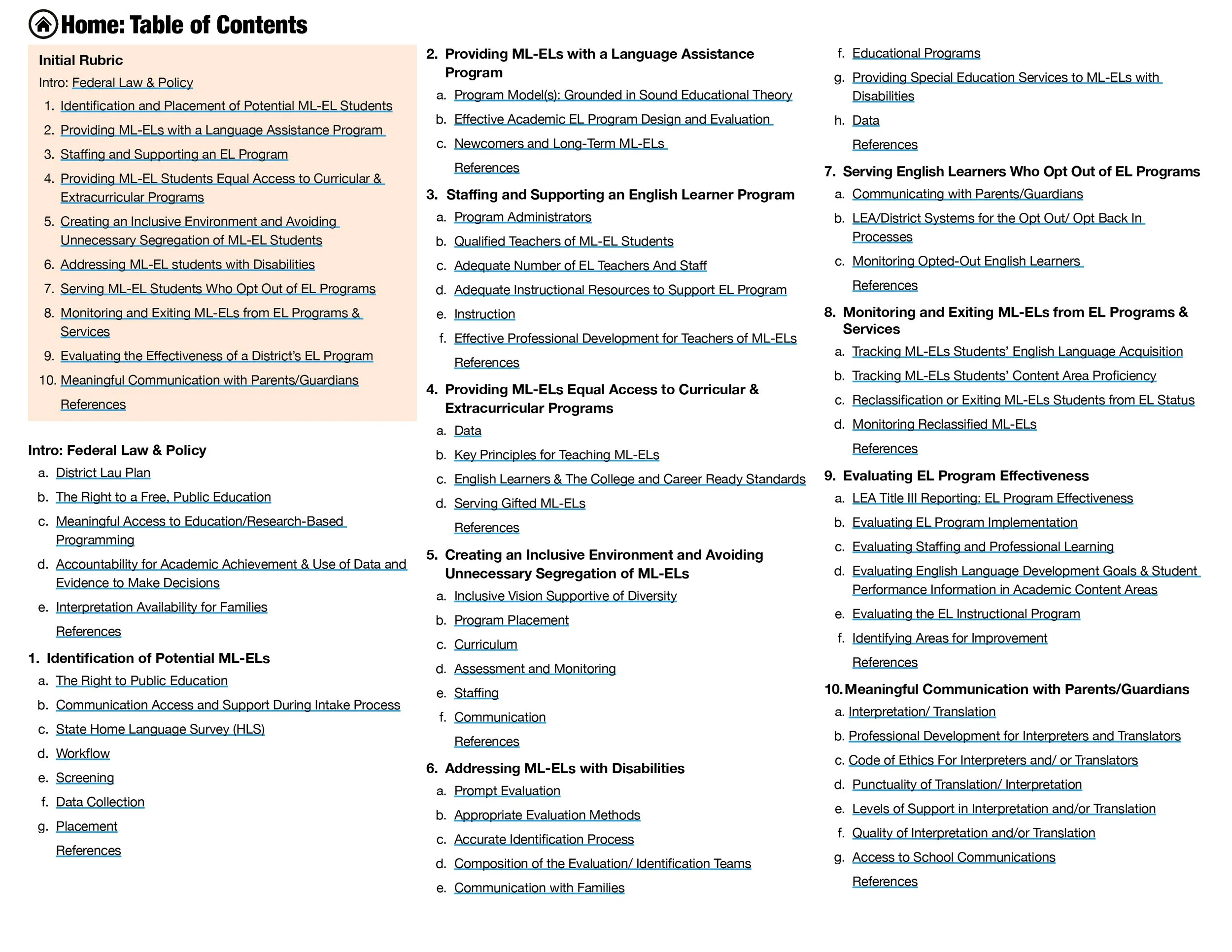
The tool works in three steps:
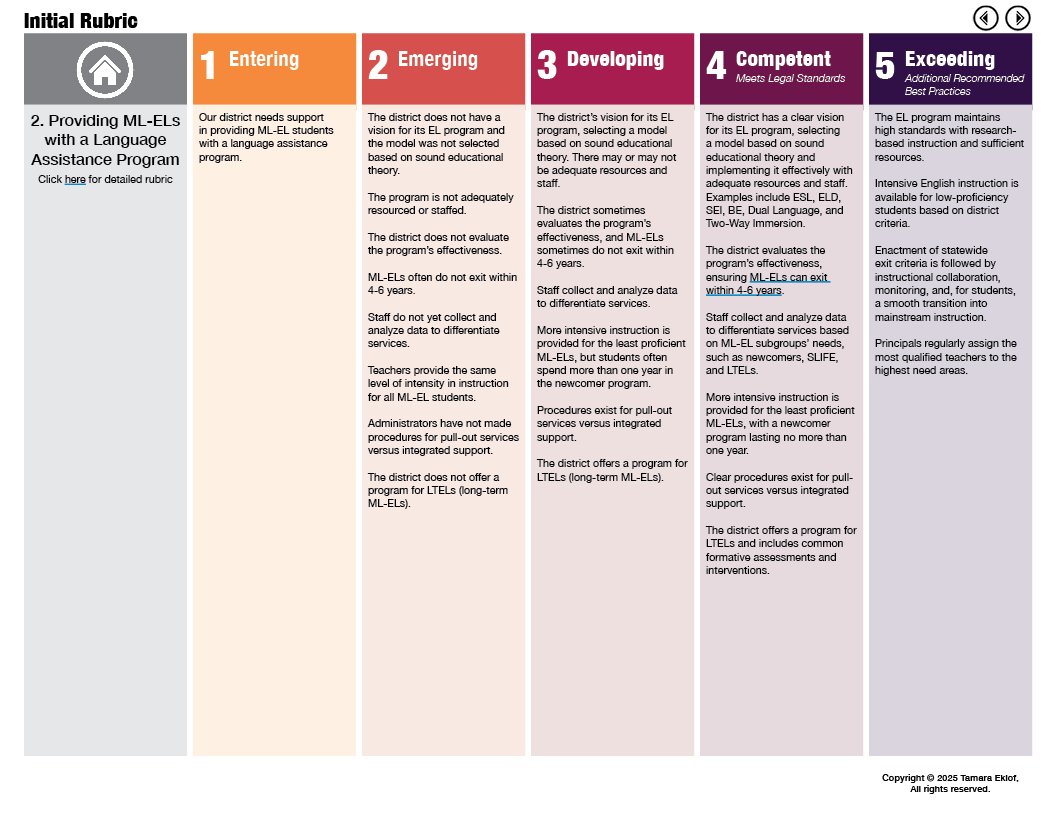
The initial rubric helps you evaluate your high-level goals using your own data.
The secondary rubrics let you examine specific parts of your program in detail.
The improvement strategies help you build targeted plans based on what your assessment shows.
You can read the story of how the Lau Guidance Tool was developed in this article in the AASA Journal of Scholarship and Practice.
This is a FREE tool accessible to all. To access the tool, you just need to set up a free account once.
Sample Pages